-

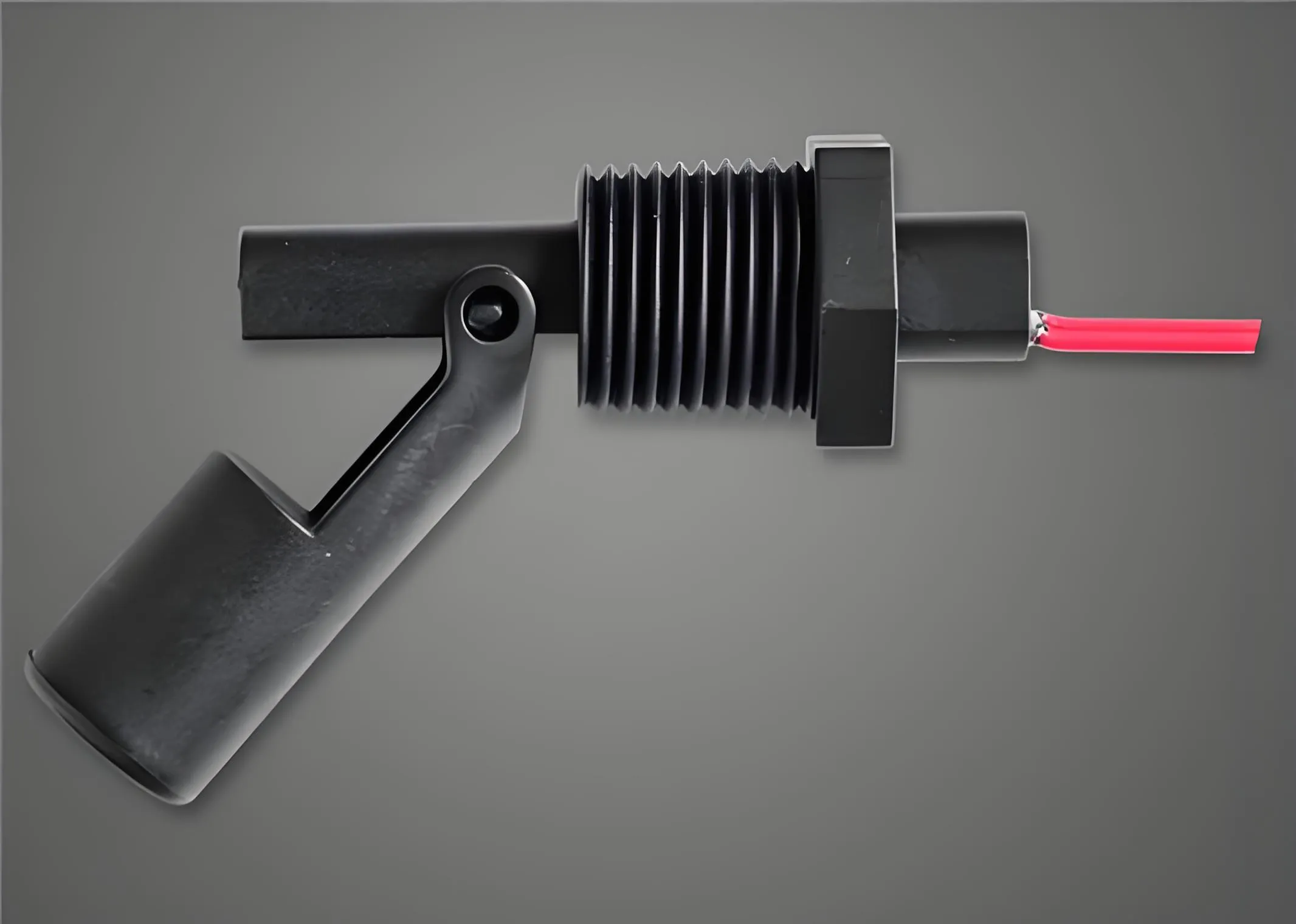
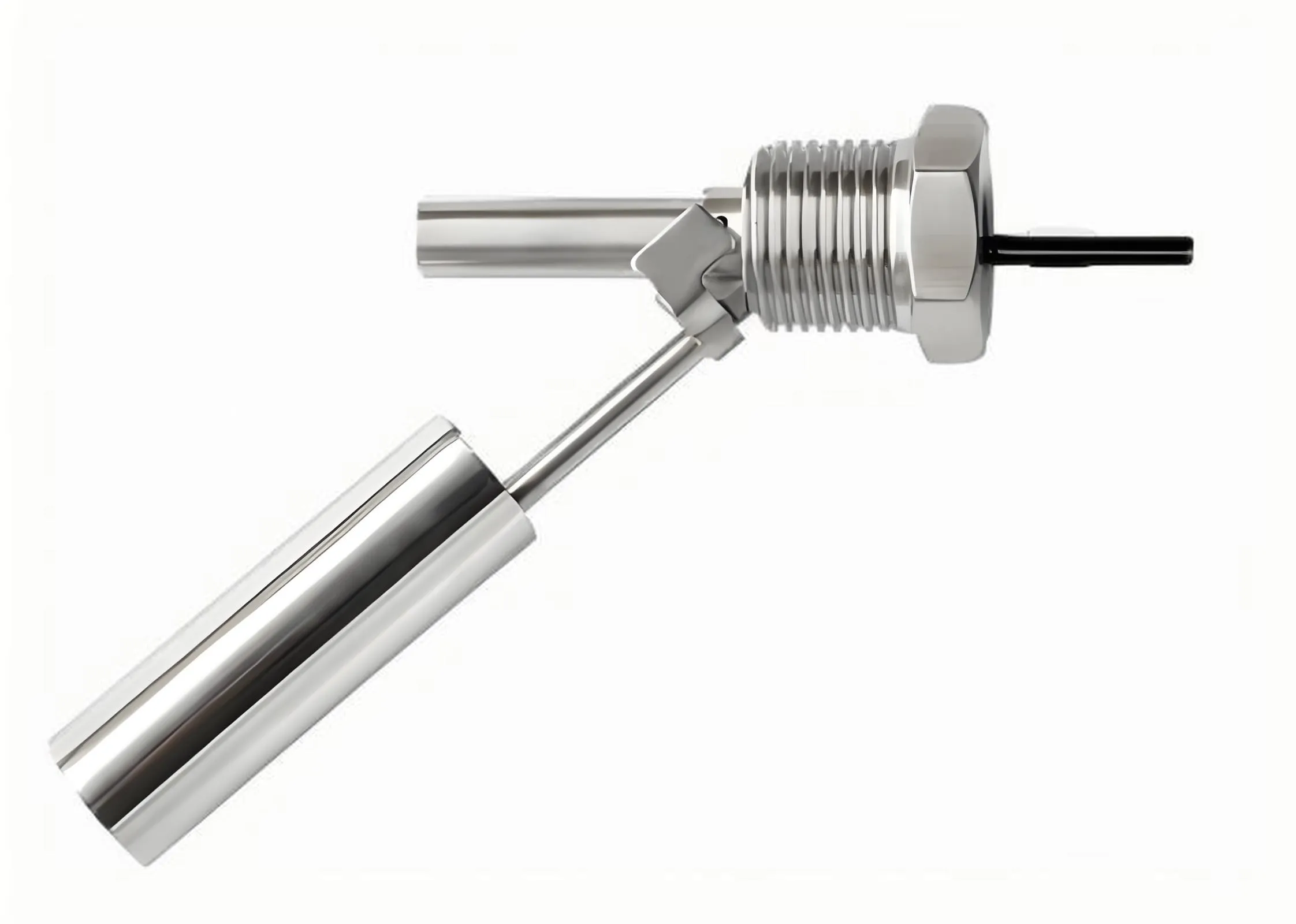
Designed for side-mounting, this liquid level sensor ensures a leak-proof fit with its hermetically sealed stem. Its doughnut-shaped float follows the liquid level and magnetically triggers a reed switch, delivering a precise electrical signal for reliable, real-time monitoring in tanks and reservoirs.
Standard Model | Mounting thread | Housing Material | Switch Type | Default Configuration |
BF2-030-L-A | 1/2" NPT | PP | NO (A) | Switching angle: Closed at 0°–15°; Open at 15°–45° from the horizontal position. |
BF2-037-L-A | M16 | PP | NO (A) | Switching angle: Closed at 0°–15°; Open at 15°–45° from the horizontal position. |
BF2-042-L-A | M12 | PP | NO (A) | Switching angle: Closed at 0°–15°; Open at 15°–45° from the horizontal position. |
BF2-047-L-A | G1/2 | PP | NO (A) | Switching angle: Closed at 0°–15°; Open at 15°–45° from the horizontal position. |
BF2-045-L-A-D | Inner G1/2 Outer M12 | PP | NO (A) | Switching angle: Closed at 0°–15°; Open at 15°–45° from the horizontal position. |
BF2-027-L-A-D | Inner 1/2" NPT Outer 1/2" NPT | PP | NO (A) | Switching angle: Closed at 0°–15°; Open at 15°–45° from the horizontal position. |
BF2-080-L-A-F | M10 | SUS304 | NC (B) | Switching level: 28mm from bottom of stem |
Horizontal liquid level sensors are point-level detection devices installed through the side wall of a tank or container. They are designed to detect whether the liquid has reached a predetermined level rather than continuously measure the entire liquid level.
Unlike vertical liquid level sensors, which are normally installed through the top or bottom of a tank, horizontal liquid level sensors use a side-entry installation. This makes them particularly useful when vertical installation space is limited or when access to the top or bottom of the tank is difficult.
In a typical float-type design, the float moves according to the liquid level. A magnet inside or associated with the float actuates a hermetically sealed reed switch inside the sensor, generating an electrical ON/OFF signal when the preset switching position is reached.
This simple magnetic switching principle provides reliable point-level detection without direct electrical contact between the switching element and the liquid.
1, Side-Mounted Installation. The sensor is installed horizontally through the side wall of a tank or container. This configuration is ideal for applications where top-mounted or bottom-mounted installation is impractical. It is especially useful for compact equipment, shallow tanks, and systems with limited clearance above or below the tank.
2, Float and Magnetic Reed Switch.The float follows the movement of the liquid and uses magnetic interaction to actuate a hermetically sealed reed switch.Because the reed switch is isolated from the liquid, the design provides a simple and reliable switching solution for liquid level detection.
3, Normally Open, Normally Closed, and SPDT Options. Horizontal liquid level sensors can be configured according to the requirements of the control circuit.
NO (Normally Open): The circuit closes when the float reaches the switching position.
NC (Normally Closed): The circuit opens when the float reaches the switching position.
SPDT (Changeover): Provides both normally open and normally closed contacts for more flexible control logic.
4, Multiple Mounting Options. Different mounting threads can be selected according to the tank structure and installation requirements, including metric and pipe-thread configurations.Customized mounting structures are also available for OEM applications.
5, Compact Design. The side-mounted structure allows the sensor to be integrated into tanks and equipment where installation space is limited.Its compact construction makes it suitable for OEM equipment and space-constrained liquid handling systems.
6, Multiple Materials Available.Horizontal liquid level sensors are constructed from robust, corrosion-resistant materials to withstand demanding conditions. Common options include stainless steel for high durability in aggressive chemicals or high-temperature environments, polypropylene (PP) for cost-effective use with water and milder fluids, and other plastics or alloys tailored to specific media. These material choices enhance longevity, chemical compatibility, and overall reliability in harsh industrial, marine, or outdoor settings.
Horizontal liquid level sensors are suitable for equipment and systems where a simple point-level signal is required.
HVAC & Air Conditioning: Used to detect condensate levels in air-conditioning and HVAC equipment, helping provide overflow protection or activate a drain pump.
Automotive:Suitable for monitoring liquid levels in coolant tanks, reservoirs, and other automotive fluid systems where side-mounted installation is preferred.
Home Appliances:Compact horizontal float switches can be integrated into water tanks, condensate collection systems, and other liquid-handling components in home appliances.
Industrial Equipment:Used for liquid level alarms, pump protection, lubrication systems, coolant tanks, and fluid reservoirs.
Test & Measurement Equipment:The compact side-mounted configuration can be used in test equipment and laboratory systems where installation space is limited.
Water and Liquid Storage Systems: Suitable for detecting high or low liquid levels in storage tanks, reservoirs, and other containers.
Selecting the right horizontal liquid level sensor depends on the mechanical, electrical, and liquid characteristics of the application.
1. Determine the Installation Position: Confirm that a side-mounted sensor is suitable for the tank structure and identify the required installation location.
2. Determine the Switching Level:Define the liquid level at which the sensor needs to change state.
3. Select the Switch Function:Choose NO, NC, or SPDT according to the required control logic.
4. Select the Mounting Thread:Match the sensor thread with the tank opening and available installation structure.
5. Select the Material:Consider the liquid type, temperature, chemical compatibility, and mechanical environment when selecting the float and housing material.
6. Check the Electrical Rating: Confirm the required voltage, switching current, and load type to ensure compatibility with the control circuit.
7. Consider Customized Requirements: For OEM applications, BST can customize parameters such as mounting thread, float material, housing material, switching level, switching angle, cable length, connector, and other mechanical or electrical requirements.
 Leave a Message