-
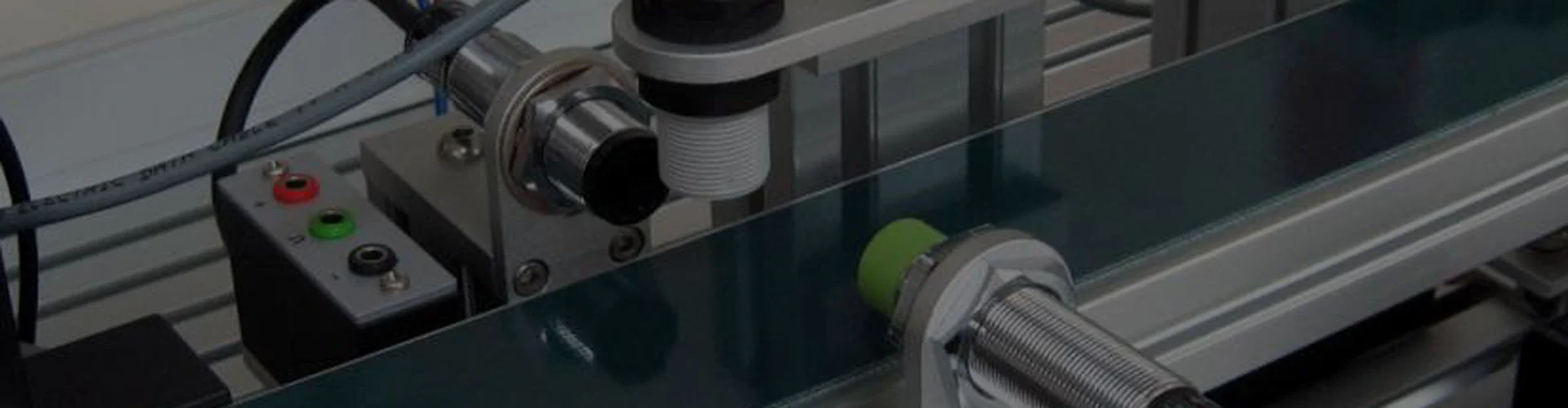
In industrial automation, achieving precise and accurate measurements is essential for ensuring operational efficiency and safety. Distance measurement sensors are integral to a wide range of applications, including robotics and conveyance systems. This guide explores the various types of distance measurement sensors and offers insights to help optimize their selection for industrial automation processes.
Distance measurement sensors come in several forms, each suited to specific industrial needs. Ultrasonic distance measurement sensors utilize sound waves to determine distances, making them effective for applications requiring reliable detection over moderate ranges. Infrared distance measurement sensors rely on light to measure proximity, offering a cost-effective solution for shorter distances. LiDAR sensors, which use light detection and ranging technology, provide high-precision measurements over longer distances, ideal for complex automation tasks. Optical encoder sensors deliver precise positional data through encoded patterns, commonly used in motor control systems. Magnetic sensor-based proximity sensors detect changes in magnetic fields, enabling non-contact measurements in rugged environments. Piezoelectric distance measurement sensors leverage mechanical vibrations for accurate distance detection, often applied in specialized industrial settings.
Position measurement sensors, a specialized category of distance measurement sensors, are designed to measure linear or angular positions with high precision. These sensors are vital in industrial automation, providing accurate location data for various applications. They are particularly valuable in scenarios requiring minimal power consumption, such as battery-powered instruments, where energy efficiency is a priority. Additionally, these sensors are well-suited for high-voltage testing environments, ensuring reliable performance under demanding conditions. In electronics manufacturing, they serve as dependable tools for testing printed circuit boards and integrated circuits, delivering consistent and precise results. In medical equipment, position measurement sensors ensure the accuracy and reliability of critical devices, while in radio frequency (RF) transmitter applications, they provide sensitive and accurate measurements essential for signal integrity.
Choosing the right distance measurement sensor requires careful consideration of several key factors to ensure optimal performance. Accuracy is paramount, as the sensor must meet the precision demands of the specific application. The operational range is equally important, as it determines the distances over which the sensor can effectively function. Environmental conditions, such as temperature, humidity, and physical constraints, must be evaluated to ensure the sensor’s reliability in its intended setting. Cost is another critical factor, as budget constraints and return on investment play a significant role in decision-making. Durability is essential for sensors operating in harsh or repetitive conditions, ensuring long-term performance. Finally, compatibility with existing systems and interfaces is crucial to seamless integration and operational efficiency.
In automated warehouse systems, ultrasonic distance sensors play a key role in tracking the position of items on conveyors, enabling precise inventory management. Their ability to measure distances up to several meters makes them well-suited for such environments, ensuring efficient and accurate operations. In robotics, magnetic sensor-based proximity sensors are widely used for precise positioning of robot arms. Their non-contact design and high accuracy make them ideal for automated manufacturing processes, where precision is critical to maintaining production quality and efficiency.
Selecting the appropriate distance measurement sensors for industrial automation is critical to achieving optimal performance and reliability. By carefully evaluating factors such as accuracy, range, environmental conditions, cost, durability, and system compatibility, you can identify the most suitable sensors for your specific needs. Making informed choices ensures enhanced efficiency, safety, and productivity in industrial automation applications. Trusted solutions like the BST sensor help ensure enhanced efficiency, safety, and productivity in industrial automation applications.
 Related BST Position Sensors